24/7 Emergency Water Removal & Structural Drying
Water damage is the single most common property loss in the Charleston area — and the most time-sensitive. Within minutes, water wicks up drywall and into subfloors. Within hours, hardwood begins to cup and swell. Within a day or two in our coastal humidity, mold gets its start. The difference between a two-day dry-out and a two-month reconstruction usually comes down to how fast professional mitigation begins.
DRYmedic of Charleston responds around the clock with truck-mounted extraction, commercial dehumidifiers, air movers, and moisture-mapping technology. We find every wet pocket — including the ones hiding inside walls and under floors — dry them to verified standards, and repair what the water damaged.
Common Water Damage Calls in the Lowcountry
- Supply line and pipe failures: Washing machine hoses, water heaters, refrigerator ice-maker lines, and aging CPVC or polybutylene plumbing that lets go without warning.
- Roof leaks after storms: Wind-driven rain from tropical systems and summer thunderstorms finds every weak flashing and worn shingle.
- Crawl-space flooding: Much of Charleston's housing stock sits on raised foundations — heavy rain and high water tables leave standing water and saturated insulation underneath.
- HVAC condensate overflows: Air conditioners run hard here most of the year; clogged condensate lines quietly soak ceilings and closets.
- Sewage backups after heavy rain: When downpours overwhelm drains, Category 3 water requires certified biohazard handling — see our sewage cleanup service.
- Tidal and storm flooding: King tides and storm surge put saltwater in garages and ground floors — a corrosive loss that needs immediate flushing and drying. See storm & flood damage.
Water Mitigation vs. Water Damage Restoration
If you've been calling around, you've heard both terms — and they aren't the same work. Water mitigation is the emergency phase: tracing the water intrusion back to its source and stopping it, extracting standing water, and drying the structure before the damage spreads. It happens in the first hours and days, and it's what decides how big the loss ends up being. Water damage restoration — also called water damage repair — is what comes after: rebuilding the drywall, flooring, trim, and paint the water ruined.
Most homeowners searching for a water mitigation company in Charleston need both, and that's worth paying attention to when you hire. When one company dries the house and a different one repairs it, the handoff is where moisture documentation goes missing and insurance claims stall. We carry the job from the first extraction through the last piece of trim, with one set of moisture readings and one point of contact for your adjuster.
Our Water Damage Restoration Process
- Emergency contact & dispatch — a real person answers 24/7 and walks you through shutting off water and power safely.
- Inspection & damage assessment — moisture meters and thermal imaging map everything that's wet, documented for your insurance claim.
- Water extraction — truck-mounted and portable extractors remove standing water fast.
- Drying & dehumidification — commercial air movers and LGR dehumidifiers dry structure and contents to verified moisture targets.
- Cleaning & antimicrobial treatment — affected surfaces cleaned, sanitized, and treated to prevent mold growth.
- Restoration & repairs — from drywall patches and flooring to full rebuilds, we return your property to pre-loss condition.
Water Damage Repair: What We Rebuild
Water rarely ruins just one thing. Water damage repair on a Charleston home usually means several trades at once — these are the components we rebuild most often, and the ones homeowners ask about first:
- Ceiling leaks and ceiling stain repair: a water stain on the ceiling — or water leaking from the ceiling outright — is the same problem caught at two different stages, and ceiling water damage usually traces back to an upstairs bathroom, a roof or flashing leak, or an attic condensate line. For a ceiling leak, we find the source, dry the cavity and the joists above it, then repair or replace the drywall and match the existing texture. Ceiling stain repair on a dry, stable spot is lighter work — we confirm with a moisture meter that the stain is no longer wet, seal it with a stain-blocking primer so it can't bleed back through, and repaint.
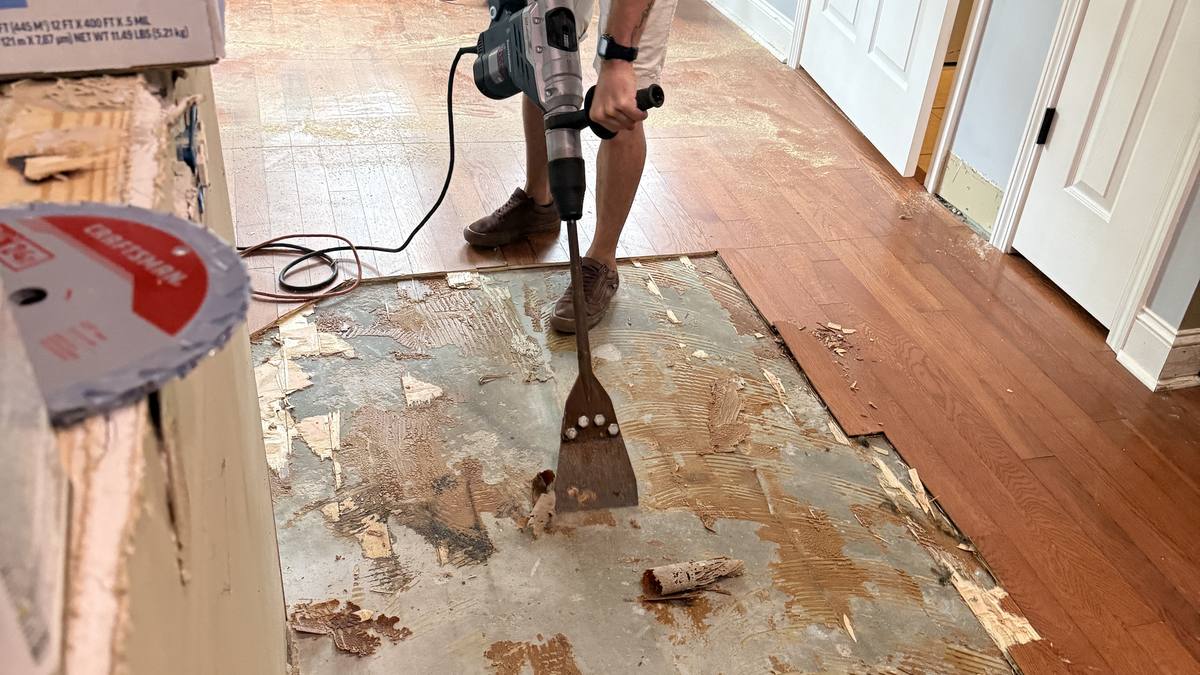
- Subfloors: water damage subfloor repair is one of the most common hidden costs of a flooded room. Plywood and OSB swell and delaminate once water gets underneath the finished floor, and a subfloor that was never dried will telegraph through whatever you lay on top of it.
- Drywall and insulation: water wicks upward through drywall well past the visible line, and wet insulation inside a wall cavity stays wet. Both get cut back to dry material rather than dried in place when saturation is deep.
- Hardwood and LVP flooring: cupping, crowning, and lifted seams. Some hardwood can be dried in place and refinished if we reach it fast enough; some has to come out. Moisture readings decide that, not guesswork.
- Crawl spaces: saturated insulation, wet ductwork, and standing water under a raised foundation — left alone, it re-humidifies the whole house from below.
Water Damage Restoration Across the Charleston Metro
Water damage Charleston SC homeowners face runs from tidal flooding on the peninsula to burst supply lines out in the Summerville subdivisions. From our James Island shop we run water damage repair in Mount Pleasant, Summerville, and North Charleston as readily as downtown — plus water damage cleanup and flood cleanup across Goose Creek, Daniel Island, West Ashley, and the rest of the tri-county area. Burst pipe water damage at 2am in Moncks Corner gets the same response as a flooded house cleanup two blocks from our shop.
Charleston's Climate Makes Drying Different
Drying a house in the Lowcountry is not like drying a house in Ohio. Ambient humidity routinely sits above 70% — which means opening the windows and running box fans actually adds moisture to your home for much of the year. Professional drying uses sealed drying chambers, low-grain refrigerant dehumidifiers, and daily moisture readings to pull water out of materials faster than mold can establish. It's also why we take crawl spaces so seriously: a wet crawl space under a dried-out living room will re-humidify the whole structure.
We Handle the Insurance Claim With You
Sudden water losses are among the most commonly covered homeowner claims. We photograph and document every affected material, generate industry-standard Xactimate-compatible documentation, communicate directly with your adjuster, and bill your carrier directly where possible. You focus on your family — we'll handle the paperwork.
Frequently Asked Questions — Water Damage
What's the difference between water mitigation and water damage restoration?
Water mitigation is the emergency work that stops the damage from spreading — extraction, drying, and moisture verification in the first hours and days. Water damage restoration, or water damage repair, is rebuilding what the water ruined afterward: drywall, subfloors, flooring, and trim. A lot of companies do one or the other. We do both on the same job, which keeps your moisture documentation and your insurance claim in one place.
How fast can you get here?
We dispatch 24/7 from James Island. Most of the Charleston metro — downtown, West Ashley, Mount Pleasant, North Charleston, Summerville — is a short drive, and we prioritize active water emergencies above all else.
Will insurance cover this?
Sudden and accidental losses (burst pipes, appliance failures) are covered by most homeowners policies. Rising floodwater usually requires separate flood insurance through NFIP or a private carrier — an important distinction in Charleston. We help you navigate either path; the full picture is in our SC water damage insurance guide.
How long will drying take?
Typically 3–5 days depending on materials and saturation, verified with daily moisture readings. We don't guess — we measure, and we show you the numbers.
What does water damage restoration cost in Charleston?
Honest answer: it's a range, because two flooded rooms are never the same job. A small, quickly-caught clean-water loss in one room typically runs $1,500–$4,000; multiple rooms or water that sat overnight, $4,000–$12,000; contaminated water (sewage, tidal, storm) starts higher because soaked porous materials have to be removed rather than dried. Subfloor damage, hardwood, and plaster push the number up — but fast response is what keeps it down. For a covered loss your actual out-of-pocket is usually just your deductible. Full breakdown of what drives the number: our Charleston cost guide. The assessment itself is free.
What should I do before you arrive?
If it's safe: shut off the water source, kill power to affected areas at the breaker, and move valuables out of the water's path. Don't use a household vacuum on standing water, and stay out of rooms with sagging ceilings. If you suspect a pipe rather than an appliance, our burst pipe guide has the two-minute meter test that confirms it.
What does a brown water stain on my ceiling mean?
Water has been through there — the only questions are the source and whether it's still active. A water stain is the visible end of water leaking from the ceiling cavity above it, so the mark on the drywall is never the whole story. Common culprits in Charleston homes: a roof or flashing leak, an upstairs bathroom (a shower drain or wax ring leaking into the ceiling below is one of our most frequent calls), or an AC condensate line sweating in the attic. A dry, stable stain may just need the source fixed and a ceiling stain repair — stain-blocking primer and paint. A stain that's growing, darkening, or bulging means water is still arriving — and a bulging ceiling can come down without warning. Don't poke it from below; call us and we'll find the source with moisture meters instead of exploratory holes.
My shower or tub is leaking into the ceiling below. Who do I call — a plumber or you?
Usually both, in that order — and we coordinate with plumbers every week. The plumber stops the leak; we handle what the water already did: drying the ceiling cavity and joists, checking insulation, and heading off the mold that starts within 24–48 hours inside a wet ceiling in this climate. If you're not sure whether it's still leaking, start with us — our moisture mapping will tell you exactly where the water is coming from and how far it traveled, which saves the plumber diagnostic time too.