Restoration Built Around Charleston's Business Economy
Charleston's economy runs on doors staying open. A restaurant on Upper King that closes for a week doesn't just lose a week of covers — it loses momentum in a market where visitors book somewhere else in thirty seconds. A hotel with water damage on two floors is turning away peak-season guests. A King Street retailer, a medical suite in West Ashley, a distribution warehouse off I-26 in North Charleston — every one of them measures a property loss in lost revenue, idle payroll, and customers who may not come back. That's the math we build every commercial project around.
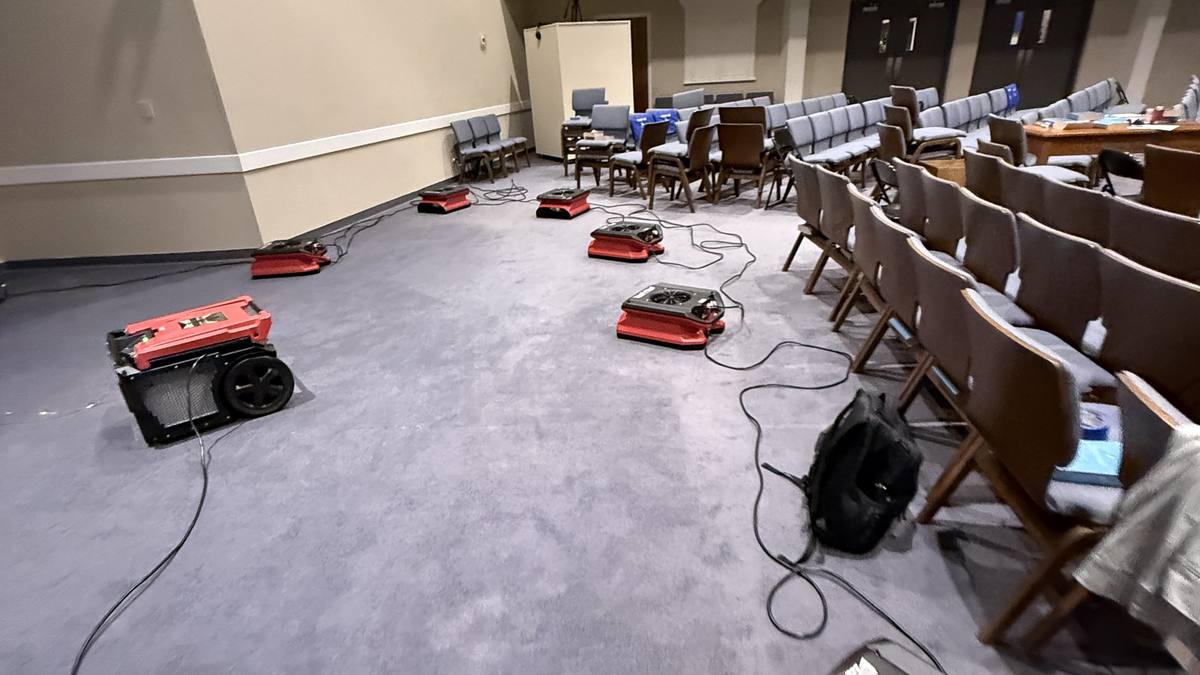
DRYmedic of Charleston is locally owned and operated on James Island, and we treat commercial losses differently than residential ones: faster mobilization, tighter phasing, and constant communication with owners, managers, and adjusters — because business interruption, not drywall, is usually the biggest cost on the table.
Commercial Properties We Restore
- Restaurants & bars: Downtown dining rooms, commercial kitchens, walk-ins, and everything a health inspection cares about — cleaned, dried, and documented.
- Hotels, inns & short-term rentals: Floor-by-floor phasing so unaffected rooms keep renting while damaged areas are restored.
- Retail: King Street storefronts and suburban centers alike — protecting inventory and fixtures and getting sales floors back open.
- Offices & professional suites: Drying and rebuilding around workstations, server rooms, and files, with after-hours scheduling.
- Medical & dental practices: Losses handled with the containment and cleanliness a patient-care environment demands.
- Warehouses & industrial: Large-square-footage drying and cleanup for distribution and manufacturing space in North Charleston and beyond.
- HOAs, condos & multi-family: Losses that cross unit lines, with the documentation boards and management companies need.
Nights, Weekends & Phased Work — So You Don't Have to Close
The cheapest restoration schedule is rarely the cheapest outcome for the business. Wherever possible, we schedule noisy or disruptive work — extraction, demolition, equipment placement — for nights and weekends, contain work zones so customers and staff can safely use the rest of the space, and phase the project so you're operating in part of the building while we restore the rest. A restaurant might close only between last seating and prep. An office might never close at all.
The same services we provide homeowners apply to commercial buildings at scale: water extraction and structural drying, fire and smoke restoration, storm and flood recovery, mold remediation, and sewage and biohazard cleanup. When inventory, equipment, or furnishings need to come out during the work, our contents and pack-out team inventories, stores, and returns them.
Priority Response Agreements for Property Managers
If you manage multiple properties — an HOA portfolio, a group of rentals, a commercial campus — the worst time to pick a restoration contractor is at 2 a.m. with water coming through a ceiling. A priority response agreement puts that decision behind you: we document your properties before anything happens, agree on protocols and authorization limits with your team, and give you a direct line that gets answered around the clock. When a loss hits, the crew that shows up already knows the building, the shutoffs, and who to call. It costs nothing to set up a conversation about it.
Local Ownership, National Large-Loss Capability
Most commercial losses in Charleston are handled start to finish by our local crew. But the Lowcountry occasionally deals in bigger events — a hurricane that damages dozens of properties at once, or a large multi-story loss that needs more equipment than any single local company keeps on hand. As part of the national DRYmedic network, we can bring in additional crews and large-loss resources when a project demands it. You keep one locally owned point of accountability; the capacity behind it scales.
We Speak Commercial Insurance
Commercial claims involve more moving parts than residential ones — building coverage, contents and inventory, tenant improvements, and business interruption. We document everything from the first hour, produce industry-standard estimates, and work directly with your carrier and adjuster so the claim reflects the true scope of the loss. Your job is running the business through the disruption; ours is making the disruption as short as possible.
Frequently Asked Questions — Commercial Restoration
Can you work around our business hours?
Yes — that's often the whole point. We regularly schedule extraction, drying, demolition, and repairs for nights and weekends so restaurants, shops, and offices can keep serving customers. Where full closure is unavoidable, we phase the work to get you reopened as fast as possible.
Do you offer priority response agreements?
Yes. Property managers, HOAs, and multi-site operators can set up a priority response agreement with us — pre-loss documentation of your properties, agreed protocols, and a direct line when something happens. When a 2 a.m. call comes in, we already know your building.
Can you handle a large commercial loss?
Yes. We're locally owned and operated in Charleston, and we're backed by the national DRYmedic network — which means additional crews and large-loss equipment can be brought in for major events like hurricanes or large multi-story losses. You get local accountability with national capacity.
How do you handle commercial insurance claims?
We document the loss thoroughly, produce industry-standard estimates, and work directly with your commercial carrier and adjuster from day one. We also help you separate structure, contents, and business-interruption considerations so the claim reflects the full impact on your operation.